If you’ve ever stared at a perfume bottle trying to figure out what “EDP” means, or wondered why one bottle costs twice as much as another that smells almost identical, the answer usually comes down to concentration, not quality.
It's all about how much fragrance oil is in the bottle
Every fragrance is a mix of scented oil and alcohol. The more oil relative to alcohol, the stronger and longer-lasting the scent — and usually, the higher the price.
Does higher concentration mean "better"?
Not necessarily — it means different. Some fragrances genuinely suit a lighter touch, while others benefit from the richness a higher concentration brings out.
Parfum sits at the top, typically 20–30% fragrance oil, lasting 8 hours or more. Eau de Parfum (EDP) is the most common modern concentration, around 15–20%, strong enough for most of the day. Eau de Toilette (EDT) is lighter, 5–15%, often reapplied through the day. Eau de Cologne (EDC) is the lightest at 2–4% — more of a quick refresh than an all-day scent.
What we make
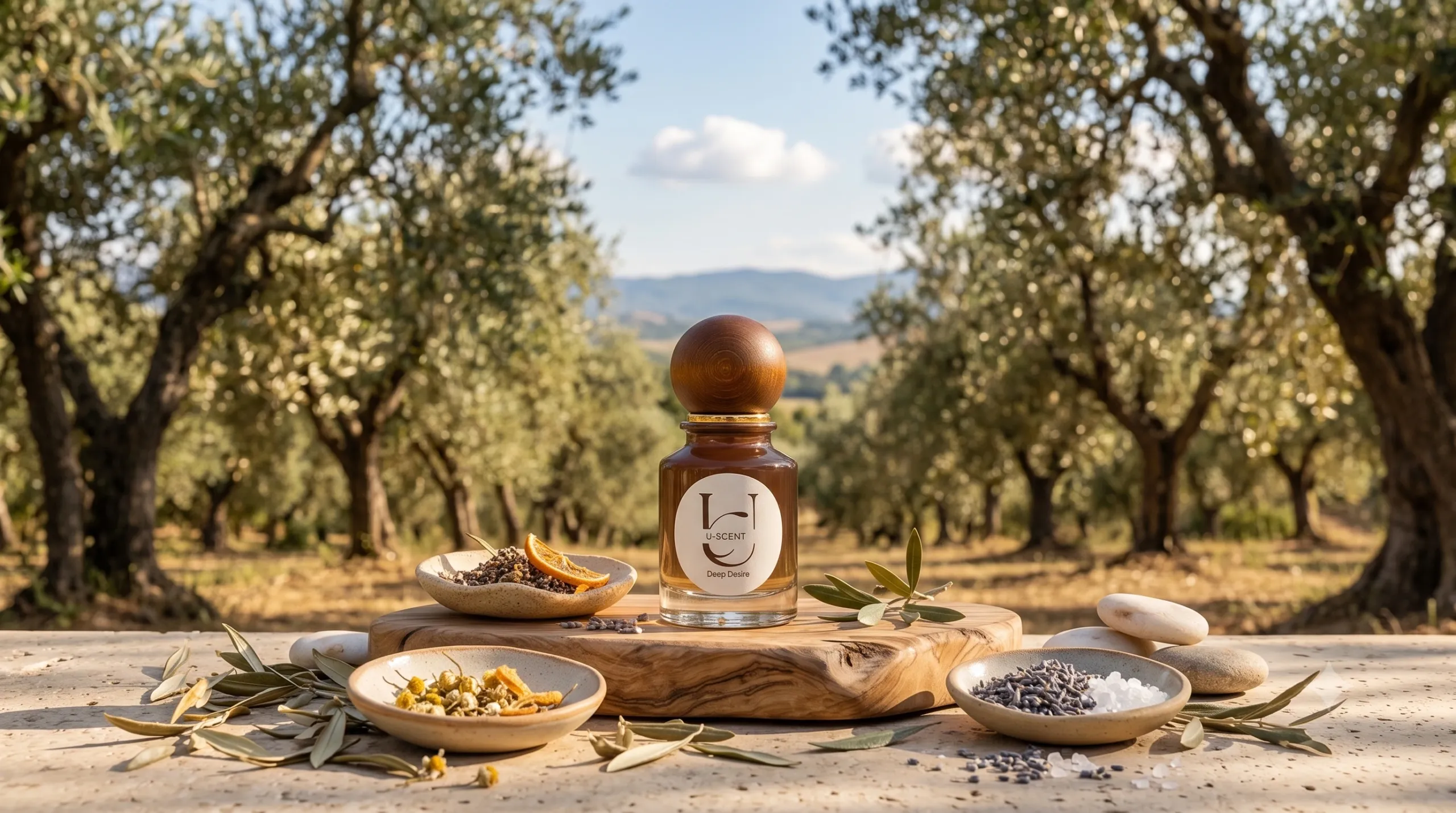
At U-scent, our fragrances are formulated as Eau de Parfum — the sweet spot between longevity and everyday wearability. Strong enough to carry through a full day, without needing a heavy hand to apply.